
Which jeans shape are you actually looking for?
A Fishgoo jeans spreadsheet search is more specific when it names the leg shape you want. Slim, wide-leg and flared labels describe different design directions, even when all three entries appear in the same pants collection. This article compares three actual saved records and the reasons a buyer might keep each one.
The 10 October snapshot has 38 pants-category titles containing the word jeans. That is a title-match count; it includes potential variations and does not identify authenticated releases or the entire denim market. The three cases below retain their individual product names, images and starting prices.
Their references range from ¥163.20 / approximately $22.67 to ¥380.16 / $52.80. A larger number does not settle the silhouette question. Decide whether you want room through the leg, a widening hem or a narrower outline, then compare the candidate that addresses it.
Slimness, leg direction and rise are different descriptions
Lee’s official denim glossary distinguishes a slim fit from a flared shape: slim generally follows the legs more closely, while flare describes an enlarged opening relative to the upper leg. Its bootcut description is a moderate flare rather than the strongest possible widening. These are design categories, not standard measurements shared by every seller.
Levi’s UK denim page separately groups leg styles and rise. Its published range includes wide-leg, straight and flare examples alongside high-, mid- and low-rise choices. This shows why a wide leg does not, by itself, establish where the waistband sits.
| Term | Design question it addresses | Separate information still needed |
|---|---|---|
| Slim | How closely does the garment follow the leg? | Waist, thigh and opening dimensions for the selected size. |
| Wide-leg | How much width does the leg carry? | Where that width begins and the actual hem width. |
| Flared / bootcut | Does the lower leg widen towards the opening? | Knee-to-hem relationship and length with the intended shoes. |
| Rise | Where does the waistband sit relative to the crotch? | A measured rise and the seller’s measurement method. |
A slim pair can also taper; a wide pair can have a comparatively straight outline. A title compresses those relationships into a few words. Keeping rise, thigh, knee, opening and length separate gives the eventual fit comparison something concrete to investigate.
Three actual catalogue candidates and their item references


| Exact candidate | Recorded design label | CNY / estimated USD | QC reported |
|---|---|---|---|
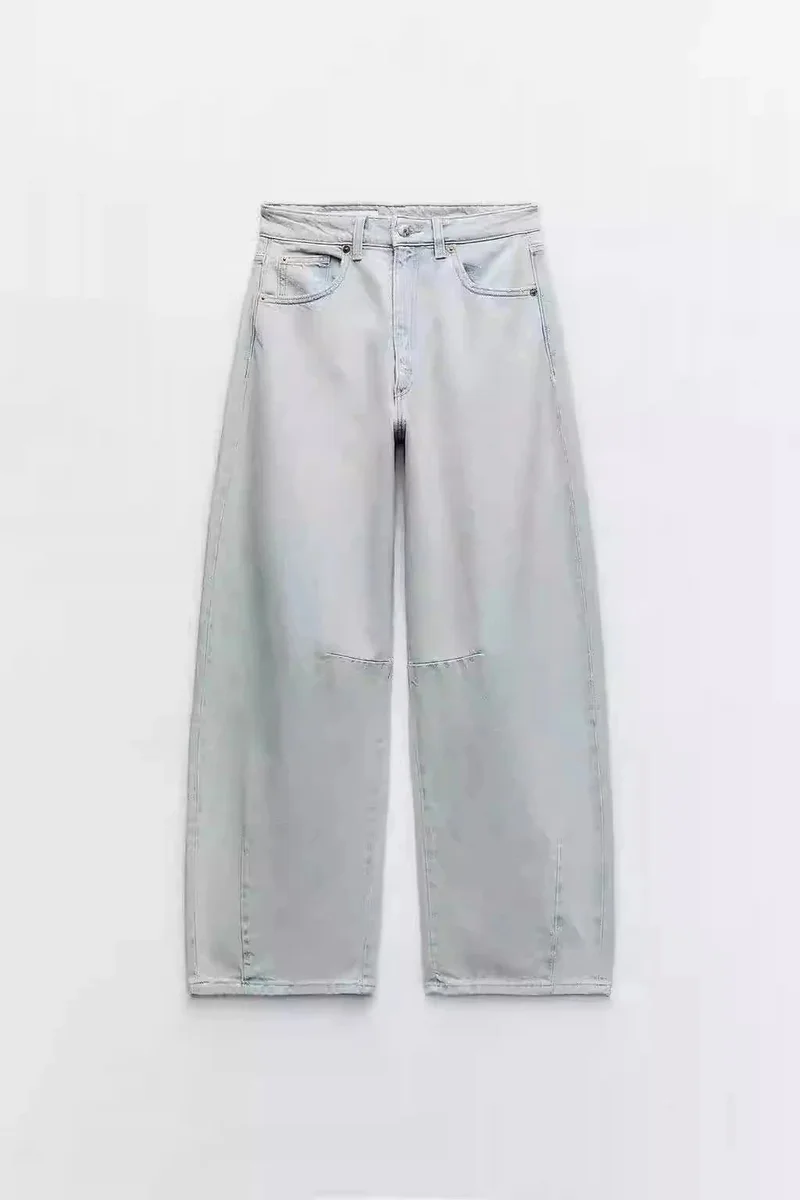
| Light Blue Wide Leg Jeans | Wide leg; light blue. | ¥163.20 / $22.67 | 0 |
| Gallery Dept. GA Black Patchwork Flare Jeans | Black patchwork flare. | ¥197.50 / $27.43 | 0 |
| Replay Hyperflex Jeans Dark Blue Slim Fit | Dark blue slim fit. | ¥380.16 / $52.80 | 0 |
The light-blue record makes width its main title cue. Its description also says high waist, but there is no verified rise field in the saved data. Keep the wider outline as a visual candidate; leave the waistband position open until measurements establish it.
The black Gallery Dept.-labelled record combines a flare label with patchwork wording. That gives it two possible reasons to enter a shortlist: the lower-leg direction and the surface/panel treatment. If you only want a plain black pair, the patchwork detail deserves its own comparison rather than being ignored because the colour matches.
The Replay-labelled dark pair uses slim fit in its title and tapered wording in its description. Its Hyperflex name is catalogue language here, not a verified material specification. The saved feed supplies no fabric percentage, stretch test or dimensions with which to certify that claim.
A real chart adds dimensions, and exposes a unit problem
The flare candidate’s catalogue image contains a size chart, so useful dimensions exist in an image even though the API has no structured measurement fields. A close reading of the original graphic gives the following entries. The column headers explicitly label length, waist, seat and thigh in centimetres.
| Image size label | Pants length (cm) | Waist (cm) | Seat (cm) | Thigh (cm) |
|---|---|---|---|---|
| 30 | 102 | 78 | 104 | 62.6 |
| 32 | 104 | 83 | 109 | 65.2 |
Within this chart, moving from label 30 to 32 adds 2 cm of length and 5 cm to the stated waist and seat figures. Those are distinct changes. The numbers explain more about the seller’s proposed size progression than the flare label alone, but the graphic does not specify a leg opening or a consistent measurement method.
There is also a concrete labelling problem: the recommended-weight header says kg, while its cells use the Chinese unit 斤, including “140斤左右” for size 30. Those units are not interchangeable. We leave that recommendation out of the comparison and do not use height or weight to assign a size.
The chart is seller/catalogue evidence for a particular record, not measurements taken from a delivered pair. Its image also shows a grey washed appearance with darker side areas, while the saved title uses black. Confirm the exact colour option and that the chart belongs to it. A generic black-flare search should not silently resolve that difference.
A separate Netherlands mixed haul: €67 shipping and clothing feedback reported a jean waist tighter than its chart, but supplied no numeric measurement. Keep that fit feedback separate from the seller-chart figures above.
A useful price comparison keeps the design requirement visible
The black flare is ¥34.30 / $4.76 above the light-blue wide-leg candidate. The dark slim-labelled record is ¥216.96 / $30.13 above the light-blue candidate. These differences are arithmetic from saved item references, not a quality score or a live checkout comparison.
If the brief is “a light, wider lower layer,” the first candidate has a direct reason to remain. If the brief is “black denim that changes direction at the lower leg,” the flare deserves attention. If the brief is “a darker, narrower leg outline,” the slim-labelled record is the closer starting point. Comparing all three purely by ascending price would miss those different requirements.
Only the first two examples pass our under-$30 starting-price filter. That creates a genuine constraint for an item budget, but it does not turn a wide-leg shape into a substitute for a slim shape. A shopper with a firm limit can seek another slim-labelled candidate rather than change the design brief without noticing.
The hem changes how much of the shoe remains visible
A wider opening can frame a larger part of the shoe, while a narrowing lower leg can leave more of the upper visible when the length permits. A flare changes the width near the bottom rather than asking the whole leg to read as equally broad. These are observations about shape, not promises about how the three records will fit a particular person.
Consider the same layered sneaker beneath two alternatives: one hem ends near the ankle; another continues over the upper. The visible panels change even though the shoe does not. That makes trouser length part of a colourway comparison, especially when an accent on the shoe is the reason it entered the outfit.
The Air Max 95 article compares three coloured shoe records at the same starting price. The outfit examples combine tops and lower layers. This denim comparison adds a different question: which leg outline leaves the intended amount of the shoe in view?
The saved records do not provide inseams or measured leg openings. We can describe the relationship to investigate, but we cannot assign a precise stacking amount or recommend a personal waist size from these images.
What is a concrete answer here, and what still needs evidence?
| Question | Answer available now | Remaining gap |
|---|---|---|
| Which candidate has each design label? | Three exact titles and catalogue images tied to individual slugs. | The selected live colour and size must match the intended offer. |
| What are the starting item references? | $22.67, $27.43 and $52.80; item-price differences shown above. | Current option price and delivery costs. |
| Which pair has the waist/rise/length I need? | Selected centimetre entries from one seller chart; no verified structured measurements. | Confirmation of that chart, the exact option, rise, opening and measurement method. |
| Are the stated materials or brand identities verified? | The feed supplies brand-labelled names and descriptions. | Independent composition and identity evidence. |
All three records report zero QC references. A catalogue photograph is useful for discovery, but it should not be called a warehouse inspection of your selected item. The presence of a try-on flag on some records likewise does not establish which size was worn or its measurements.
Explore Fishgoo pants and jeans finds with a single design requirement in mind. Keep the chosen image, exact record and unresolved fit dimensions together. The best outcome of the comparison is a smaller set of relevant alternatives with clear reasons, rather than a universal best-jeans ranking.
References & research
Sources checked on 12 Oct 2026. Dated catalogue observations and illustrative calculations are identified in the article.
- Lee: Official denim fit glossary
Primary explanations of slim, flared and bootcut silhouettes. No seller-independent sizing standard or durability ranking is adopted.
- Levi’s UK: Denim leg styles and rise categories
Official examples of separately described leg styles and rises; not specifications or stock claims for the three unrelated catalogue items.
- Fishgoo Finds catalogue methodology
38 pants-category title matches for jeans in the filtered 10 October snapshot. Matching titles count records, not verified models.
- Catalogue record: Light Blue Wide Leg Jeans
Saved 10 October 2026 title, image, starting item price and reported QC count. The brand-labelled record is not an authentication, fit or material test.
- Catalogue record: Gallery Dept. GA Black Patchwork Flare Jeans
Saved 10 October 2026 title, image, starting item price and reported QC count. The brand-labelled record is not an authentication, fit or material test.
- Catalogue record: Replay Hyperflex Jeans Dark Blue Slim Fit
Saved 10 October 2026 title, image, starting item price and reported QC count. The brand-labelled record is not an authentication, fit or material test.
- Catalogue image: Flare jeans and embedded size chart
Visually checked the original image: size 30 and 32 centimetre entries transcribed; conflicting kg/斤 weight labels excluded. The seller chart does not establish actual-item measurements or authenticate the goods.
Related research & buyer shares
- Fishgoo QC photos and measurement checks
Identify which photograph or measurement is needed before dispatch.
- Fishgoo Budget Finds — Under-$30 Examples & Item Totals
A tee, trouser and pouch example show what an under-$30 item price does and does not cover. Compare the saved references and add up a shortlist before treating it as a delivered budget.